
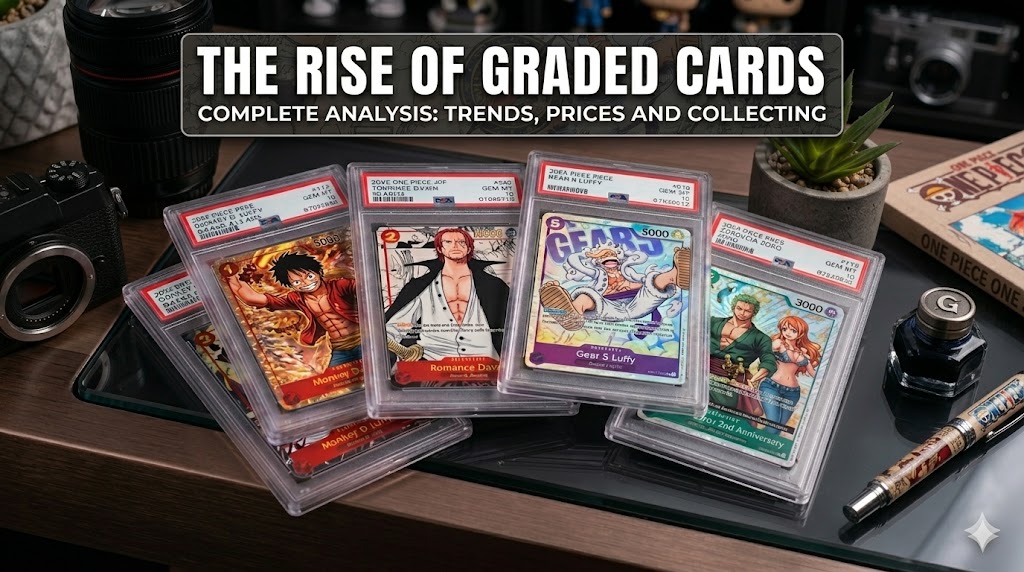
PSA Grading for One Piece TCG: When It's Worth Grading and How to Do It from Europe
Learn when to grade your One Piece TCG cards with PSA. This 2026 guide covers costs from Europe, the break-even formula, and how to spot a PSA 10.
Last updated:
PSA grading in the One Piece TCG can multiply a card's market value by 3 to 10 times—or it can end up as a costly mistake if the piece fails to hit the elusive PSA 10 Gem Mint status. For European collectors in 2026, the decision to certify isn't just about the card's beauty; it's a financial calculation involving international shipping, insurance, and tier fees.
This guide explains precisely when it is worth certifying a One Piece TCG card from Europe, the real costs involved, and how to navigate the submission process from the UK, Germany, Spain, and beyond.
What is Grading and Why It Matters for One Piece TCG
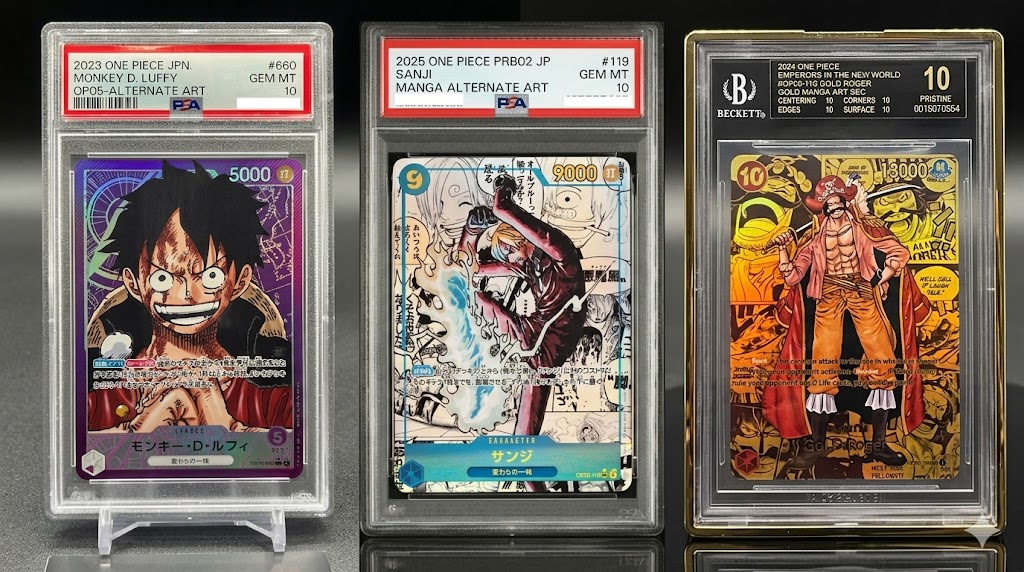
Grading is the process of sending a card to a third-party authentication service (like PSA, BGS, or CGC) where experts examine its condition under magnification. The card is assigned a numeric grade from 1 to 10, then sealed in a tamper-evident sonic-welded plastic case, commonly known as a "slab."
The PSA 1-to-10 Scale Explained
- PSA 10 (Gem Mint): A virtually perfect card. Four perfectly sharp corners, sharp focus, and full original gloss.
- PSA 9 (Mint): A superb condition card that exhibits only one minor flaw (such as a slight wax stain or a minor off-centre strike).
- PSA 8 (Near Mint-Mint): A high-end card with slight visible defects like a tiny touch of wear on a corner.
- PSA 7 and below: Generally, these do not provide a financial "bump" over the raw price for modern One Piece cards.
Raw vs Slab vs Crossover
A "raw" card is uncertified. Once "slabbed," it enters a different market tier. A "crossover" refers to sending a card already graded by another company (like BGS) to PSA to see if it qualifies for the same or a higher grade in a PSA holder.
PSA vs BGS vs CGC vs ARS: Which to Choose?
While PSA remains the industry leader for resale liquidity, other companies have carved out niches in the One Piece community.
| Company | European Recognition | Specialty | Main Downside |
|---|---|---|---|
| PSA | Very High | Global Standard / Liquidity | Cost and Turnaround times |
| BGS (Beckett) | High | Subgrades / Black Label 10s | Lower liquidity for average grades |
| CGC | Mid-High | Fast turnaround / Graphics | Lower value multiplier than PSA |
| ARS | Increasing (Japan focused) | Aesthetic metal plates | Harder to sell in EU markets |
Real Grading Costs from Europe in 2026
Grading from Europe is significantly more expensive than in the US due to the "International Tax." You must factor in:
- Official Tier Fees: Value/Economy tiers usually sit around £20–£25 per card.
- Logistics: Secure shipping to the submission centre (or the US) and the return trip often adds €40–€80 to the total order.
- Import Duties: Depending on your country (UK vs EU), customs may apply to the "service value" or the "returned card value" if not handled correctly.
When is Grading Worth It? (The Break-Even Rule)
Never grade "on a whim." Use the Break-Even Formula to decide if a card is a candidate for PSA grading:
Expected Return = (Probability of PSA 10 × Price at 10) + (Probability of PSA 9 × Price at 9) – Raw Price – Grading Cost.
If the result isn't at least 2x the grading cost, it is usually better to sell the card raw or keep it in a magnetic one-touch holder.
Card Types Worth Grading
- Manga Rares: Automatic candidates due to high raw value.
- Flagship / Winner Promos: Limited supply makes them highly desirable in PSA 10.
- Alt Art Leaders: Popular characters like Law, Luffy, or Zoro maintain high multipliers.
Pre-Submission Card Preparation
Don't waste money on cards that won't hit a 10. Use a 10x loupe and a strong LED light to inspect:
- Centring: Ensure the borders are balanced (PSA allows up to 60/40 on the front for a 10, but aim for 50/50).
- Corners & Edges: Look for "silvering" on the edges or "whitening" on the rear corners.
- Surface: Check for print lines, scratches, or "dimples" often found in OP-05 and OP-06 sets.
Worked Example: Portgas.D.Ace Manga Art
Let's look at the numbers for a classic chase card:
- Raw Price: £600
- Grading/Shipping/Insurance: £100
- PSA 10 Market Value: £1,400
- PSA 9 Market Value: £700
In this case, a PSA 10 doubles your investment. Even at a PSA 9, you "break even" (Raw £600 + Costs £100 = £700). This is a low-risk, high-reward grading candidate.
Frequently Asked Questions
How long does PSA take in 2026?
Standard Economy tiers currently take 3 to 6 months for European collectors. Express services can return cards in as little as 3 weeks but cost significantly more.
Which cards should I NOT send for grading?
Avoid sending standard Super Rares (SR) or Parallel Rares with a raw value under £50 unless they are for your personal collection ("PC"). The grading cost will likely exceed the value added.
Is it worth grading Japanese-language One Piece cards?
Only if they are high-end promos or Manga Rares. While the Japanese market is huge, European buyers generally pay a premium for English-language slabs for playability and readability.
Ready to protect your collection? Check our European store directory to find local partners offering group submission slots to save on shipping costs.
Get preorder alerts
Be the first to know when preorders open for new One Piece TCG sets.